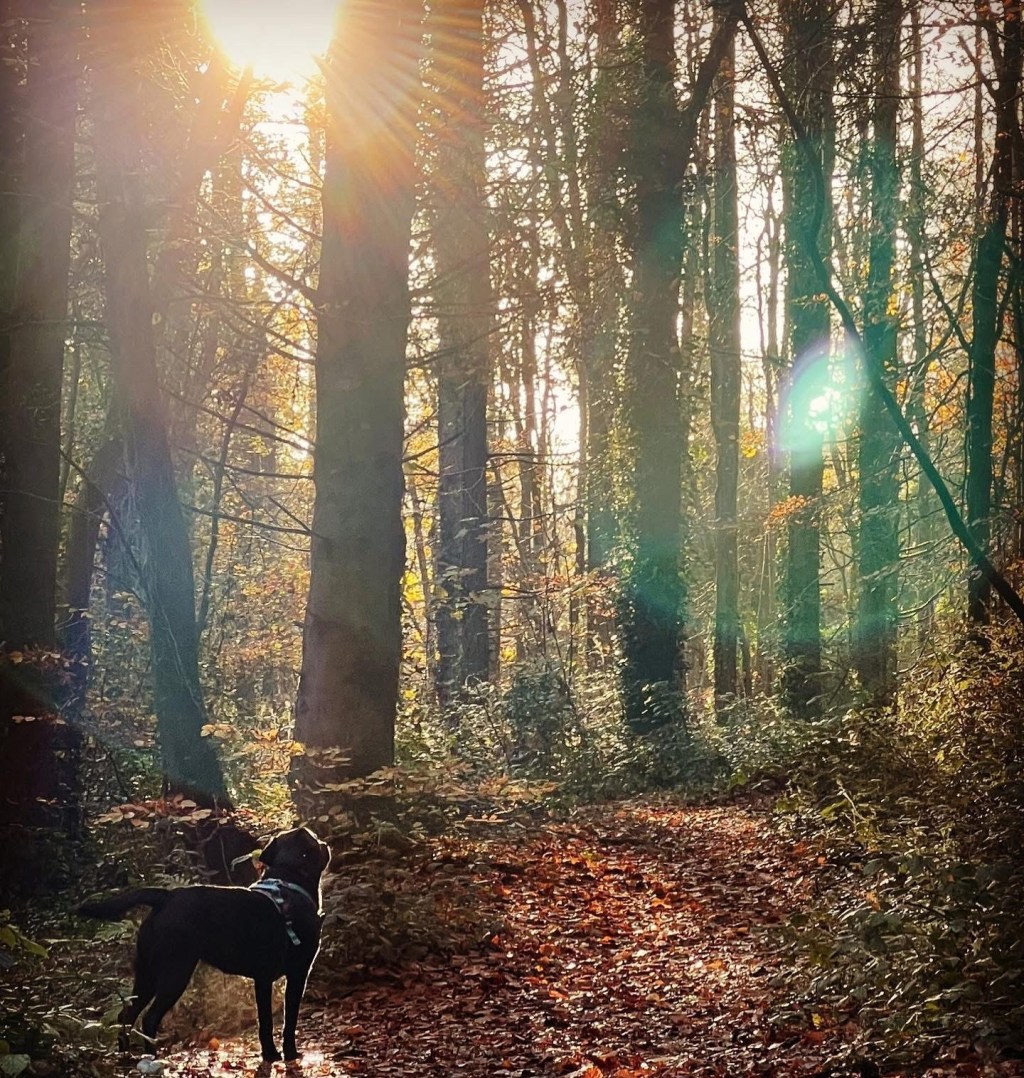
To say that 2024 was a tough year would be minimising what was probably one of the most anguish filled years of my life- if not THE most. After a road of tortuous ups and downs and months of hospital stays, I lost my beloved husband Graeme to cancer. The devastation felt crippling and one of my solaces and dearest source of comfort (aside from the most amazing support of my friends and family) was our dog Blue, or Bluebell as I came to call her.
Bluebell forced me out of bed on days when my lifeforce was a whimpering sigh. Her cuddles and unwavering love soothed the rough edges of my broken heart and her need for exercise led us into countless forests and glens that felt both nurturing and healing.
So when Bluebell started to experience kidney failure and we were told that she wouldn’t survive a month, I collapsed. This was too much loss in too short of a time. Similar to her ‘Daddy’, she was too young to die. It felt unfair, premature and devastating.
What came next was a bit of a shock to me. I didn’t want to tell anyone about it. You see, I felt like I had used up my quota of expressed kindness and sympathy from those around me. I didn’t want to make a social media post announcing her death, nor text any statements to my friends who were not ‘in the know’ of what was going on. Dare I say it? There were corners of my heart where I felt a bit of shame- like I must be so flawed as to have this much pain and suffering thrust upon me in such a short time. Surely, it’s unnatural. Ok, upon reflection, maybe there was some self-pity.
And then, in an unexpected way, as is the way of such things, grace draped itself around my shoulders in the form of a shift in perspective. I had run into an old friend in a crowded space. My friend hadn’t seen me properly since Graeme’s passing but had seen me many times throughout Graeme’s illness. My friend’s quiet care and understanding eyes reminded me that they too had lost their spouse and other loved ones in a very short time. When this realisation crept in, I reached out and grabbed their hand. Somehow I had forgotten. This shared experience gave me the strength to tell them about losing Blue. Amongst the noise, both of us shed a quiet tear in recognition that not only were we united by this experience of pain but also that shame had no place here. It was compassion that was needed. And in my case, self- compassion for the suffering that I was enduring in that moment.
It can be common to isolate ourselves when we are suffering. For me, I felt alone and I started to take my grief personally, when in all actuality, loss is a universal experience. It is part of the human condition to go through periods in our lives where it feels like we are hit with one thing after another. My friend’s quiet comfort reminded me that I wasn’t alone. It reminded me that rather than attack my already tender heart, I could be extending kindness to it. This is what it means to be self-compassionate. What’s more, this is something that I teach and here I was needing to be re-schooled in this important lesson.
Dr. Kristin Neff Ph.D. is a pioneer in the study of self-compassion, being the first one to operationally define and measure the construct of self- compassion more than twenty years ago. She specifically identifies self-compassion as a means of mitigating the harmful qualities of shame that can lead us to self-isolation. One helpful practice that she developed is called the Self-Compassion break. At one time, this practice was my go-to. However, the vulnerability and exhaustion that I was experiencing seemed to be stronger than my ability to recall it. It wasn’t until I was reminded that I wasn’t alone, and felt the kindness in my friend’s eyes, that I remembered.
The Self Compassion break requires a ‘knowing’ that suffering is present. This is where the quality of mindfulness is helpful. Once we notice that things are difficult, we can actively turn towards it with the knowledge that we are not alone in our struggle. Not that we take joy in this fact, but someone somewhere has been through something similar. Finally, we see if it is possible to extend kindness to ourselves, rather than give ourself an extra battering. For me, this kindness often comes in the simple question of ‘what do I need in this moment that would be helpful?’
In the moment of meeting my friend, what I needed was to tell them that not only had I lost Graeme, but Blue had also passed. In telling them, I was able to keep Graeme and Blue alive in my heart and honour the deep love that we shared. I smiled to myself and felt my commitment to be self-compassionate deepen.
If this speaks to you, I invite you to join me at the Sanctuary’s Tuesday morning (10am GMT) online meditation session. I will be exploring the concept of self-compassion. Click the link below to access the Zoom room.
Click here to join me at the Sanctuary’s online meditation session on Tuesday morning at 10am
If you would like to try a self-compassion break as part of a meditation, click the audio below


Leave a Reply